A Simple Breakdown of How Interior Walls Are Built and Finished
Drywall installation is the process of hanging wall panels, fastening them to framing, sealing the seams, and finishing the surface so it is smooth and ready for paint or texture. It turns open wall framing into solid, finished walls and ceilings. When done right, it creates a clean surface that looks flat, strong, and ready for daily use.
What You Need Before Starting
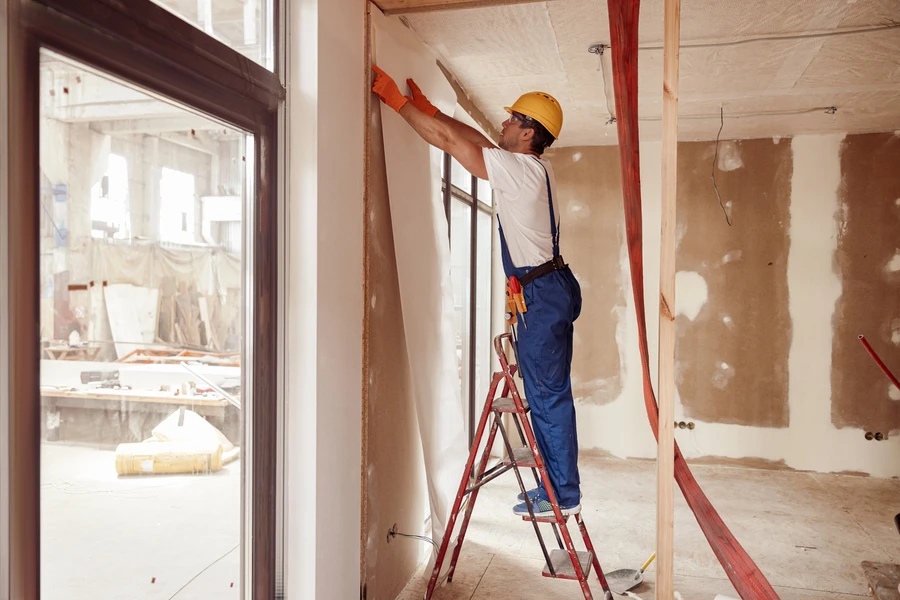
Before starting drywall installation, you need the right tools, materials, and a prepared space. Planning ahead saves time and reduces mistakes.
- Drywall sheets in the correct thickness
- Drywall screws or nails
- Drill or screw gun
- Utility knife
- Drywall saw
- Joint tape
- Joint compound
- Putty knives and taping knives
- Sanding block or pole sander
- Ladder or lift for ceilings
You also need to check that framing is straight and spaced correctly. Electrical wires and plumbing lines should already be in place. Insulation should be installed before panels go up.
Step-by-Step Drywall Installation Process
Here is how drywall installation usually works from start to finish:
- Measure and cut panels. Measure each wall or ceiling area carefully. Cut sheets to match the space, leaving small gaps at the floor.
- Hang ceiling panels first. Ceiling sheets go up before wall sheets. This helps support the edges and creates cleaner joints.
- Attach panels to framing. Use drywall screws to secure panels to studs and joists. Screws should sit slightly below the surface, not break the paper.
- Hang wall panels. Start at the top and work down. Stagger seams so they do not line up in a straight line.
- Apply joint tape. Place tape over all seams and inside corners. This keeps cracks from forming later.
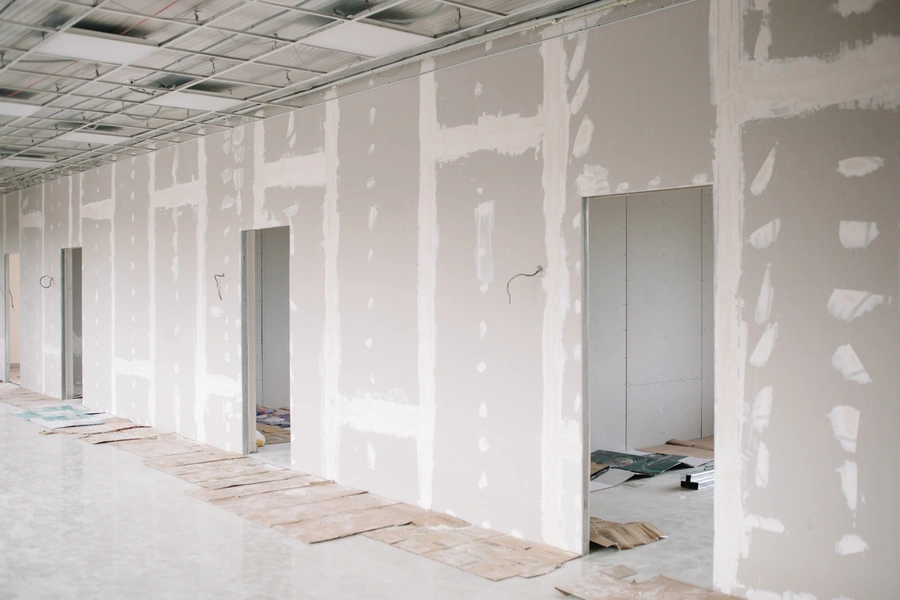
- Add joint compound. Spread compound over tape and screw heads. Let it dry, then sand lightly.
- Apply additional coats. Two or three thin coats create a smooth finish. Sand between each coat.
- Final sanding and inspection. Once dry, sand the surface flat and check for dents or ridges.
After sanding, the walls are ready for primer and paint or texture.
Common Mistakes to Avoid
Even small errors during drywall installation can lead to visible flaws later. Here are mistakes people often make:
- Driving screws too deep and tearing the paper
- Using too much joint compound at once
- Skipping sanding between coats
- Not staggering seams
- Forgetting to check framing for uneven studs
Thick layers of compound can crack while drying. Crooked framing can cause panels to bow. Taking time during each step leads to smoother results.
When to Call a Professional
Small patch jobs are manageable for many homeowners. Larger projects can be harder. Ceiling work, tall walls, and full-room installations often require extra help and special tools.
You may want expert help if:
- You are finishing a basement
- You are remodeling multiple rooms
- You need a smooth level 4 or level 5 finish
- You see recurring cracks in existing walls
- You are working under a tight deadline
Professionals have lifts for ceilings, experience with clean seam work, and the skill to produce flat surfaces that look great under paint and lighting. Proper drywall installation also helps with sound control and fire resistance.
Final Recommendation and Next Steps
If you are planning a project in Riverside, CA, solid walls start with proper drywall installation. At Drywall Solutions, we handle everything from hanging panels to smooth finishing work. We focus on clean lines, strong seams, and surfaces ready for paint. Call us at (909) 565-8586 to talk about your project and set up a time for us to help bring your space together.